

Wakesurfing has transformed boating into a refined experience where precision and performance shape every moment on the water. Choosing the right setup depends heavily on wakesurf boat engine power and torque, which directly influence wave quality and rider control. Many enthusiasts focus on appearance or brand reputation, yet engine capability remains the most decisive factor for consistent wakesurfing results.
This guide explains the fundamentals of engine performance, torque behavior, and practical requirements that define an excellent wakesurfing experience.
Why Engine Power and Torque Matter in Wakesurfing
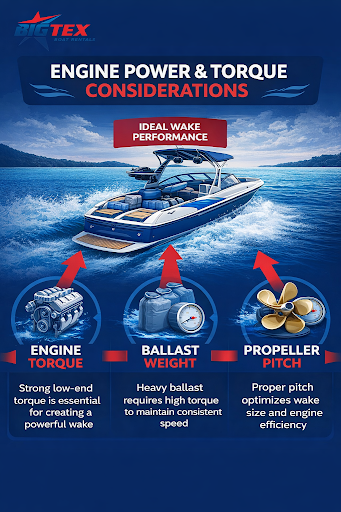
Unlike traditional watersports, wakesurfing demands steady, low-speed movement with a powerful push behind the boat. Therefore, torque requirements for wakesurfing boats become more important than peak horsepower numbers alone.
Torque provides the force required to move heavy loads, especially when ballast systems significantly increase total weight. Meanwhile, engine power supports sustained performance across varying water conditions.
Moreover, riders depend on a stable and well-shaped wake, which requires consistent thrust without sudden speed fluctuations. As a result, engines designed for smooth delivery outperform high-speed focused alternatives.
Understanding Wakesurf Boat Engine Requirements
When evaluating wakesurf boat engine requirements, several factors come into play beyond simple specifications.
Key considerations include
- Weight of the boat, including passengers and ballast systems
- Desired wake size and wave consistency
- Typical water conditions and elevation levels
- Fuel efficiency expectations during extended sessions
In addition, the boat engine size for wakesurfing must match the intended usage pattern. A smaller engine may struggle under load, while an oversized engine could unnecessarily reduce efficiency.
The Role of Low-End Torque in Wakesurfing
Low-end torque determines how effectively a boat accelerates from idle to surfing speed. Since wakesurfing operates at lower speeds, this aspect becomes critical.
A boat with strong low-end torque for wakesurfing can maintain a steady speed even when heavily weighted. Consequently, riders experience smoother waves and improved balance throughout the session.
Furthermore, engines that deliver torque at lower RPM ranges reduce strain and improve fuel usage. This balance ensures long sessions without excessive fuel consumption.
Horsepower vs Torque in Wakesurf Boats
Many beginners assume horsepower alone defines performance, yet this assumption often leads to poor decisions. A proper wakesurf boat horsepower guide reveals the difference clearly.
Key distinctions
Feature | Horsepower | Torque |
Primary function | Speed generation | Pulling force |
Importance in wakesurfing | Moderate | High |
Impact on wake quality | Indirect | Direct |
Performance at low speed | Limited | Strong |
Therefore, the best engine for wakesurf boats combines adequate horsepower with exceptional torque output.
Ideal Engine Size for Wakesurfing Boats
Choosing the correct engine size depends on boat length, ballast capacity, and usage frequency. Generally, engines for wakesurfing fall within a specific range.
Typical engine recommendations
- Small boats under 20 feet require moderate engines with strong torque characteristics.
- Mid-sized boats benefit from balanced engines with increased displacement
- Larger boats demand high torque engines capable of handling heavy ballast loads
In addition, selecting the right inboard engine wakesurf boat configuration improves weight distribution and wake formation.
Inboard vs Outboard for Wakesurfing
One of the most common debates involves inboard vs outboard for wakesurfing, and the answer strongly favors inboard setups.
Reasons inboard engines excel
- Better weight distribution enhances wake shape
- Propeller placement improves safety for riders
- Torque delivery aligns with low-speed performance needs
Outboard engines may offer convenience, yet they rarely match the precision required for wakesurfing conditions.
How Ballast Weight Influences Engine Performance
Ballast systems play a central role in wake creation, yet they also place additional strain on the engine. The relationship between ballast weight and engine power cannot be overlooked.
Heavier ballast increases resistance, requiring greater torque to maintain speed. Consequently, underpowered engines struggle to sustain consistent performance.
Effects of ballast on engine behavior
- Increased fuel consumption during extended sessions
- Reduced acceleration without sufficient torque
- Greater importance of propeller optimization
Propeller Pitch and Torque Output
While engine selection remains essential, the propeller also influences performance significantly. The connection between propeller pitch and torque output affects acceleration and efficiency.
A lower-pitch propeller increases torque delivery, allowing better performance under heavy loads. Conversely, higher-pitch propellers favor speed but reduce pulling power.
Therefore, matching propeller specifications with engine characteristics ensures optimal wakesurf results.
Engine RPM and Wake Performance
Maintaining consistent speed requires precise control of engine RPM and wake performance. Fluctuations in RPM can disrupt wave formation and rider stability.
Engines designed for wakesurfing deliver smooth RPM transitions, ensuring continuous thrust without abrupt changes. This consistency creates a predictable wake, which enhances rider confidence and enjoyment.
Fuel Efficiency in Wakesurf Boats
Fuel consumption remains an important factor, especially during long sessions. Efficient engines balance power and economy effectively.
Modern engines designed for fuel efficiency in wakesurf boats use advanced technologies to optimize combustion and reduce waste. As a result, boat owners enjoy longer rides with fewer refueling interruptions.
Wakesurf Boat Performance Specs Overview
Understanding wakesurf boat performance specs helps buyers make informed decisions. These specifications provide insight into real-world capabilities.
Important performance indicators
- Torque curve across RPM ranges
- Maximum ballast capacity
- Engine displacement and configuration
- Propeller compatibility
Where to Experience High-Performance Wakesurf Boats
Exploring real-world setups provides the best understanding of engine capabilities. You can discover premium options through trusted providers.
- Explore wakesurf-ready boats here: https://bigtexboatrentals.com/wake-ski-boat/
- Browse pontoon options for relaxed cruising: https://bigtexboatrentals.com/pontoon-boats/
- Plan group outings with party barges: https://bigtexboatrentals.com/party-barges/
- Experience luxury yachts for special events: https://bigtexboatrentals.com/yachts/
- Organize unforgettable celebrations: https://bigtexboatrentals.com/bachelorette-party/
These options provide practical insight into how engine performance translates into real water experiences.
Final Thoughts
Selecting the right combination of engine power and torque transforms wakesurfing from a simple activity into a refined experience. While horsepower contributes to overall capability, torque defines real performance where it matters most.
By understanding wakesurf boat engine power and torque, enthusiasts can make smarter decisions and enjoy smoother sessions with better wake consistency.
Ready to Elevate Your Wakesurfing Experience
Imagine carving perfect waves with effortless control while your boat delivers smooth and reliable power every single session. Now is the perfect time to experience premium wakesurf performance with expertly maintained boats.
Visit https://bigtexboatrentals.com/ today and explore top-tier wakesurf options designed for unforgettable moments on the water. Whether you plan a casual outing or a special celebration, the right boat makes all the difference.
Your perfect wave is waiting.